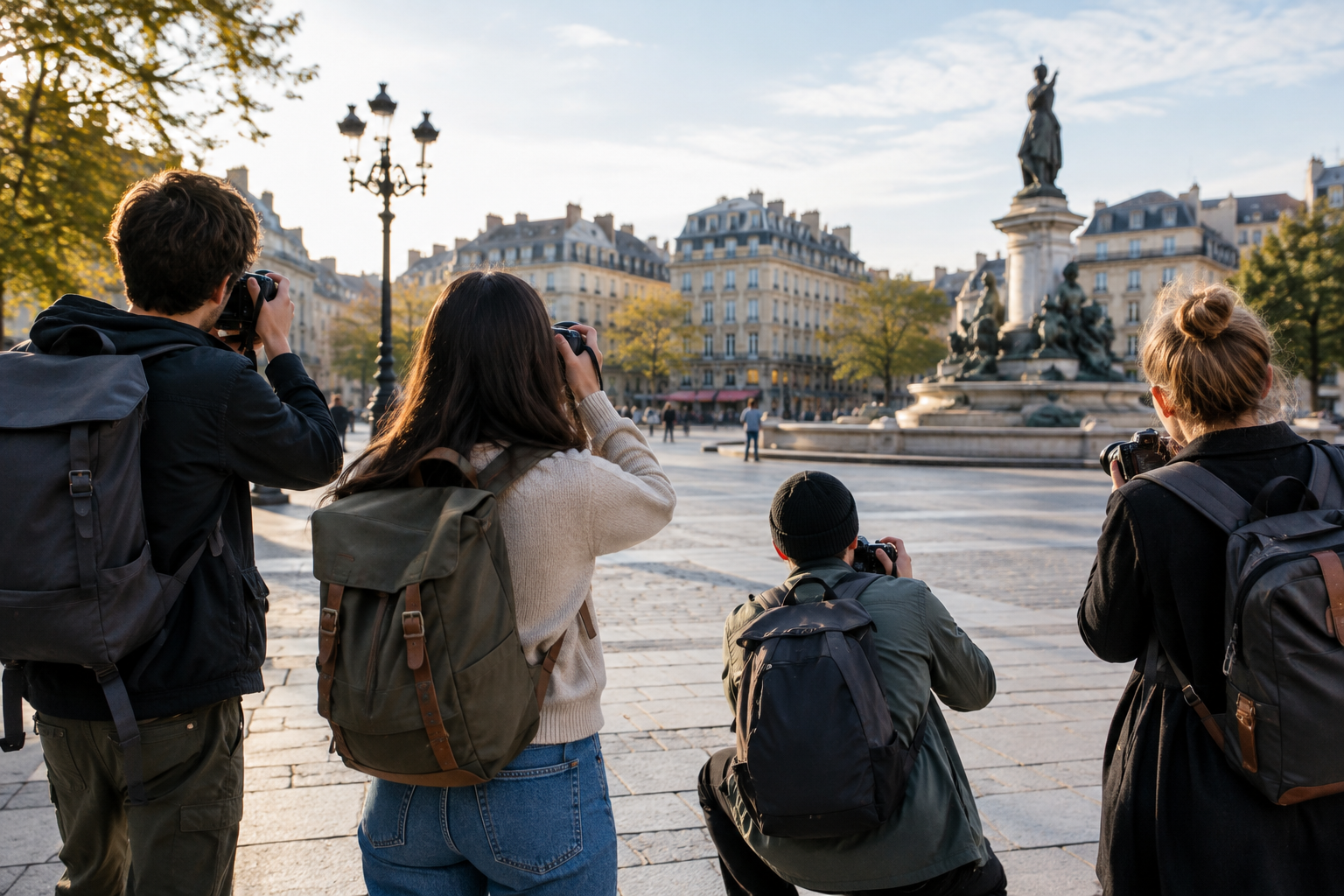
To find local photography club events, identify a club within a realistic travel distance, look for a dated outing announcement, and ask the organiser to confirm the arrangements before you travel. Treat a club profile as a starting point, not proof that an event is happening or that visitors can attend. Check the date, participation rules, meeting point and accessibility requirements directly.
Your goal is to move from “this group looks interesting” to “I know what is planned, whether I can participate, and what I need to prepare.” Use the process below to make that decision without relying on old notices or assumptions about membership.
Start with your practical requirements
Before searching, write a short description of the outing you want. “Something local” is less useful than “a daytime photography walk reachable by public transport, with opportunities to stop and photograph.”
Decide which conditions are essential and which you can negotiate. You might accept an unfamiliar subject but need a step-free route. Alternatively, you might be flexible about travel but want an outing specifically focused on portrait practice.
Consider these questions:
- How far are you willing to travel, including the return journey?
- Which dates and times could work for you?
- Do you want independent shooting, informal conversation or structured instruction?
- Will you attend alone, with a companion or with a child?
- What terrain, distance and pace would be manageable?
- What equipment do you intend to bring?
- Are there participation costs you need to establish before committing?
Choose a few non-negotiables. These become your screening criteria when you read announcements or contact a club. Keep preferences separate so that you do not reject an otherwise suitable outing simply because its subject is new to you.
Find clubs, then investigate their event information
You can begin at the photography directory homepage and investigate possible club leads. Keep a short working list rather than contacting every group you encounter.
For each candidate, record its name, the location mentioned in the information you find, and where you saw its event details. Do not assume a club’s name tells you where a particular outing starts. Check the actual destination and meeting point.
When reviewing information, distinguish between three things:
- A club description explaining its general interests.
- An activity summary describing previous or typical outings.
- A dated announcement inviting participation in a particular event.
For planning purposes, look for the third type. A gallery labelled “recent walks” may help you decide what to ask about, but do not treat it as an invitation to the next walk.
If a club interests you but you cannot find an upcoming date, ask a narrow question: “Are any local outings currently confirmed, and may a prospective member attend?” Avoid asking for an entire calendar when you only need to establish whether there is a suitable next opportunity.
Check whether an outing is actually confirmed
Read an announcement as a set of arrangements to verify, not just an appealing description. Look for a complete date, a start time and an identifiable organiser or contact route. Check the year as well as the month and day.
Make sure you understand whether the notice describes an open invitation, an expression of interest or a confirmed booking. Wording such as “proposed walk” or “date to be agreed” should prompt a question rather than travel plans.
Separate missing details from deal-breakers
An announcement does not need to answer every possible question. However, you should resolve anything that affects whether you can attend safely and practically before committing.
| Decision area | What to look for | Question to ask if unclear |
|---|---|---|
| Event status | A dated announcement and clear participation process | Is this outing confirmed, and is registration still open? |
| Location | Destination and precise meeting point | Where should a first-time attendee meet the group? |
| Visitor participation | Any stated guest or membership conditions | May I attend before deciding whether to join? |
| Format | Walk, workshop, talk or independent shooting | Is instruction included, or should participants work independently? |
| Physical demands | Route, pace, terrain and planned stops | What walking and standing should I prepare for? |
| Costs | Any stated charge and what it covers | Are there participation, admission or other required costs? |
| Changes | A way to receive updates | How will participants hear about cancellation or a changed meeting point? |
If an essential detail remains unanswered, keep the event provisional in your own plans. An attractive destination is not a substitute for workable arrangements.
Ask about participation before assuming you can join
Check whether you need advance approval, a reservation or membership. Do not infer permission to attend from the fact that you can read an announcement.
Ask about the kind of participation expected, too. You may be looking for a relaxed photo walk while the organiser is planning an assignment with a fixed timetable. Establishing that distinction gives you a clearer basis for deciding.
Useful questions include:
- Is this outing suitable for someone attending the club for the first time?
- Must I register, and how will I know my place is confirmed?
- Are there any age restrictions or arrangements for accompanying guests?
- Is a particular level of experience expected?
- Is there required equipment, rather than merely suggested equipment?
- Does attendance involve any commitment beyond this event?
Treat equipment examples carefully. If you intend to use a phone, ask whether that fits the activity rather than assuming you need to buy a camera. If specialist equipment is mentioned, establish whether it is necessary for participation or simply relevant to one optional technique.
Request written clarification of any payment requirement before paying. Ask what the payment covers and what arrangements apply if you or the organiser cancel. Do not fill gaps with assumptions based on another club’s practices.
Make accessibility questions specific
“Is the event accessible?” can leave too much room for interpretation. Describe the conditions you need and ask about the actual route and venue. You do not need to disclose a diagnosis to explain a practical requirement.
For a walking outing, consider asking about surfaces, slopes, steps, gates and the longest stretch without a planned stop. For an indoor activity, ask about the entrance, seating, toilets and movement between rooms.
Include the whole journey
Check the route from your arrival point to the meeting place, not just the photography location. Consider the return journey if the outing finishes somewhere different or continues into the evening.
Other questions to consider are:
- Can you leave early without needing the group to return with you?
- Is there somewhere to sit during pauses?
- Are restrooms available along the planned route?
- Can a support person attend, and do they need to register?
- Is there an alternative if part of the route is unsuitable?
- How should you contact the organiser if you cannot find the group?
Ask the organiser to distinguish known details from uncertainties. If route suitability has not been checked, decide whether you need more information, a different meeting arrangement or another event. Do not treat a friendly but general reassurance as confirmation of a specific access requirement.
Contact the club with a concise message
Give the organiser enough information to answer your important questions without sending a lengthy personal history. Name the outing, state that you are interested in attending, and prioritise the details that determine your decision.
Here is a fictional message template to adapt:
“Hello, I’m interested in the photography outing described in your announcement. Could you confirm the date, start time and meeting point? I would be attending for the first time. Are visitors welcome, and do I need to register or pay anything in advance? I also need a route without steps; could you confirm whether the planned route meets that requirement? Please let me know how participants receive updates if arrangements change. Thank you.”
Replace the accessibility question with your own requirement rather than including it automatically. If the announcement already answers a question clearly, acknowledge that information and ask only what remains uncertain.
Keep your response and any booking confirmation together. If arrangements change later, refer to the latest message rather than an earlier screenshot. If you receive no reply, consider another contact method the club itself provides, or move on to another candidate. Silence is not confirmation of a place.
Compare suitable events without guessing
Once you have replies, compare the events against your original requirements. Use “confirmed,” “unclear” and “not suitable” rather than assigning precise scores to information you do not have.
Prioritise essential conditions first. An outing with an appealing photographic subject should not outweigh an unresolved access issue or a return journey you cannot make.
For each option, write a short decision note:
- Why the activity interests you.
- Which essential arrangements have been confirmed.
- What remains unanswered.
- What action you need to take next.
If your first shortlist does not produce a workable option, return to the all listings page to investigate other leads. Widen one preference at a time, such as the photographic subject or day of the week, rather than abandoning your essential requirements.
Consider starting with an event whose arrangements you can understand clearly. You can use the experience to decide what to seek next, without treating a single outing as a complete picture of a club.
Two fictional examples of choosing an outing
The following scenarios are invented to illustrate the decision process. They do not describe real clubs, events or participation policies.
Example: a beginner looking for a first walk
Alex wants a daytime outing and plans to use a phone. One notice describes a landscape session but does not explain whether participants receive instruction. Another describes a general walk but leaves visitor attendance unclear.
Alex contacts both organisers rather than choosing on the event title alone. The questions focus on visitor permission, registration, equipment and whether beginners are expected to work independently.
For this fictional decision, imagine that one response confirms the arrangements Alex needs, while the other leaves attendance unresolved. Alex chooses the confirmed option, provided the travel and cost details also fit. The choice rests on suitability, not on a claim that one photographic subject is better for beginners.
Example: an experienced photographer checking access
Sam is comfortable photographing independently but needs a step-free route and places to rest. An announcement names a promising location without describing the route.
Sam asks about the planned start point, surfaces, seating and finish location. In this fictional scenario, the organiser explains that part of the route has steps and cannot confirm an alternative.
Sam leaves that outing off the shortlist and asks about a different event. The decision does not require judging the club as a whole; the available information simply does not establish that this particular plan meets Sam’s requirements.
Prepare for the outing and review the experience
Before leaving, check the latest confirmation, your registration status and any message about changed arrangements. Save the meeting instructions in a form you can access during the journey.
Pack for the confirmed activity rather than every possible photographic opportunity. Consider weather protection, power, storage, appropriate clothing and any personal essentials. Ask before bringing bulky equipment that could affect movement or shared space.
During the outing, clarify any instructions you do not understand. Do not assume that group attendance gives you permission to enter restricted areas, photograph anyone without consideration, or publish other participants’ images. Ask about the relevant arrangements and make your own decisions about what you photograph and share.
Afterwards, consider whether the pace, communication and social format suited you. Separate event-specific issues from broader preferences: disliking one route does not necessarily mean you dislike group photography.
If you want to explore alternatives, you can revisit the directory starting page with a clearer list of questions.
Common mistakes to examine
Watch for these errors when making plans:
- Treating an old event report as a current invitation.
- Assuming a public announcement means anyone can attend without registration.
- Confusing an informal outing with a taught workshop.
- Asking about accessibility only after committing to travel.
- Leaving costs, cancellation arrangements or the finish location unresolved.
- Buying equipment before checking what the activity requires.
- Assuming no reply means approval to join.
When you notice one of these gaps, return to the specific unanswered question. You do not need exhaustive research; you need enough confirmed information to make your own attendance decision.
FAQ
Can I attend a photography club event without becoming a member?
Ask the organiser about the particular event. Do not assume visitor access, a trial visit or a membership requirement. Confirm whether attending creates any further commitment before registering.
How can I tell whether an event announcement is current?
Check the full event date and read for signs that arrangements are still provisional. Ask the organiser to confirm the next outing and how updates will reach registered participants.
What should I ask if I have accessibility requirements?
Describe the practical conditions you need, such as a step-free route, seating or a manageable walking distance. Ask about the whole journey, including the meeting point and finish, and request clarification where details remain uncertain.
What if there are no confirmed outings near me?
Ask a relevant club whether another outing is being planned, without treating that enquiry as a booking. Consider widening your travel area or preferred dates only if practical. Keep looking rather than treating an undated activity description as a confirmed event.